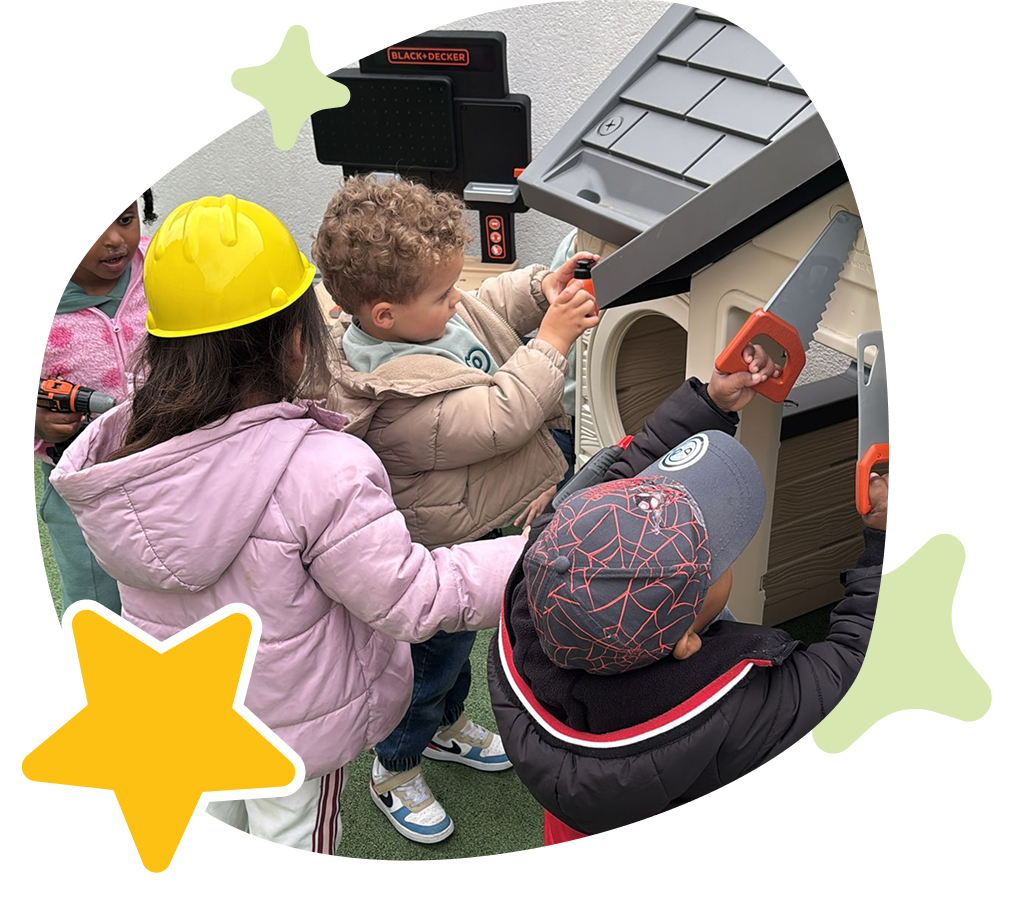
All learning takes place in a fun, play-based environment with exciting activities led by qualified, experienced and sensitive practitioners. At the start of your child’s learning journey, we aim to support learning through these 3 learning and development areas within the national curriculum, so that each child has the best start:
Our programs
What do children learn at Elgin Pre-school?
2-3 year old program: The first steps of discovery
Personal, social & emotional development: We help your child build confidence, make their very first friends, and learn how to manage their feelings in a supportive space.
Communication & language: Through stories, songs, and plenty of chatter, we help toddlers find the words to express their thoughts and wonders.
Physical development: From balancing and climbing to mastering those tricky pincer grips for drawing, we keep little bodies active and healthy.
3-4 year old program: Building bigger ideas
At this stage, we expand our focus to include four specific areas of learning. All learning for these areas is delivered through fun, play-based activities with the child’s preferred play dispositions. This means that we are led by the child’s interests. In all we do, the child comes first, and we follow the child’s lead. Our qualified and sensitive practitioners continually make assessments of the individual child’s progress and plan for the next steps. We introduce these four exciting areas through the magic of play:
Reading & Writing: Falling in love with stories, recognising letters, and making those first meaningful marks on paper.
Mathematics (Numbers & shapes): Exploring patterns, shapes and solving puzzles through hands-on games.
Understanding the world: We explore nature, talk about our community, and discover how the world works.
Expressive arts & design: Unleashing creativity through painting, building and music.
4-5 year old program: The journey to school
Our mission is to help every child to succeed; To be confident, capable and ready for school. We focus on the “Early Learning Goals” (ELGs)—these are the gentle milestones that show a child is ready for a school environment, such as:
Independence: Being able to put on their own coat and manage their belongings.
Social readiness: Sitting and listening in a group, taking turns, and following instructions.
Confidence: Feeling brave enough to ask questions and try new things.
Early Years Foundation Stage Framework guide
Download the guide for more detailed information on the Early Years Foundation Stage Framework (EYFS) we follow.
Our effective teaching methods
Playing and exploring
It is important that the environment actively encourages and provides children with opportunities to play and explore. Children need to be able to explore in every area of our provision. Within these areas, there are opportunities for children to explore and investigate using open-ended resources. Children need to be able to use their imagination and explore their surroundings.
Active learning
Active learning is not just about children being physically active. Children also demonstrate active learning when engaging in activities that require them to apply their mental abilities. For example, children will show a can-do attitude when attempting to do a task, they will show a great deal of concentration and will rarely give up on the task. Children are more interested in attempting a task if it is of interest to them. Therefore, we tune into children’s interests. Creating an environment that is led by children’s interests encourages children to become active learners. It also helps practitioners identify and plan the children’s next steps.
Creating and thinking critically
For children to be creative and think critically, we provide them with lots of opportunities to work things out on their own or with others; this will develop their problem-solving skills. At times, adults will need to use their skilful knowledge and know when to intervene and scaffold children’s learning. As we know, young children observe what is happening around them, and they absorb the information. As children begin to engage fully in activities, they will start asking questions about how things work. At this stage, adults need to be skilful in asking open-ended questions to help extend the learning opportunities.